
Featured project · Project websiteProject website ↗
STREAM: Dynamic postoperative AKI prediction
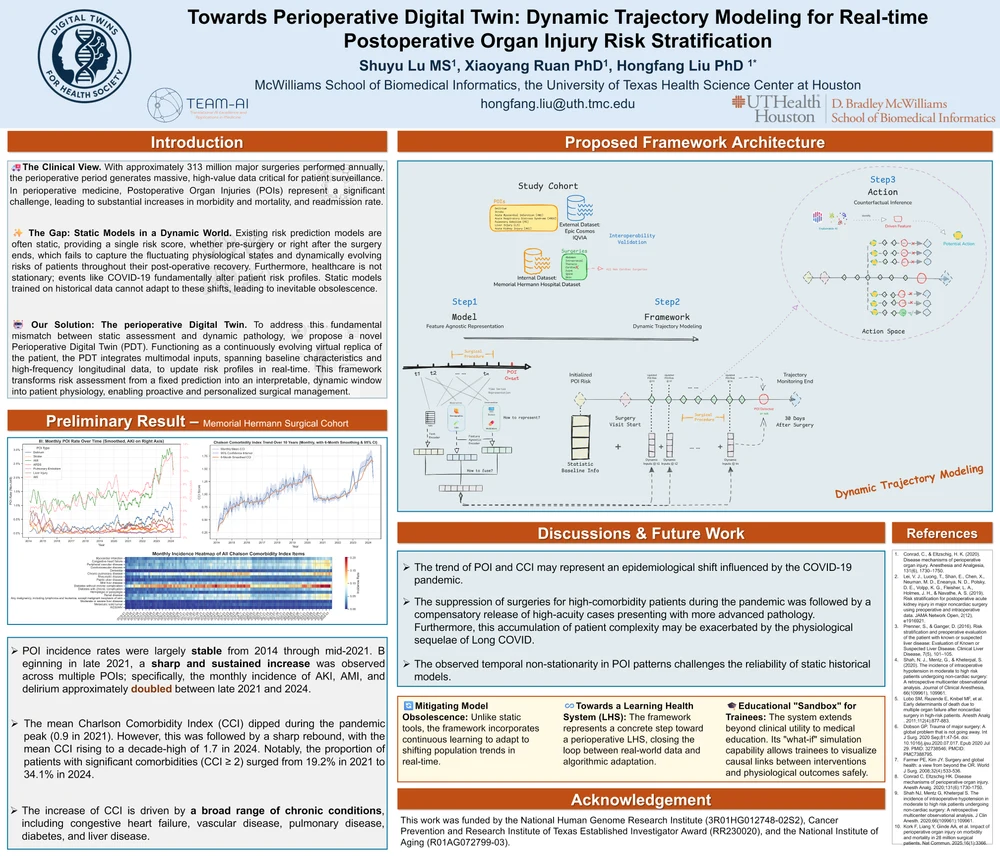
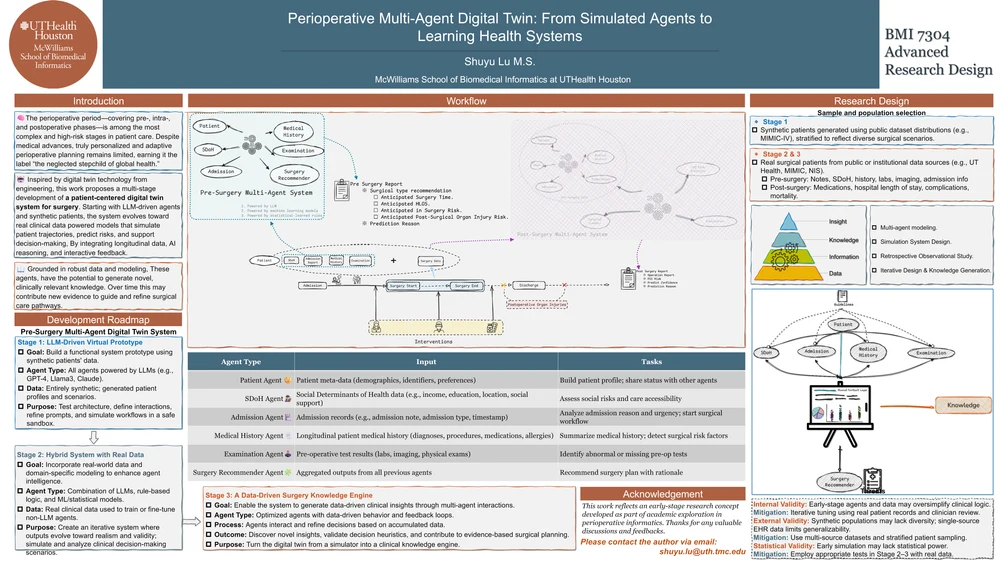
An event-stream Transformer that estimates postoperative acute kidney injury (AKI) risk at surgery and updates it as new clinical events arrive.
Clinical eventsDiagnoses, medications, labs
Event-stream TransformerIrregular, time-stamped EHR
Updated AKI riskAfter each postoperative event
The repository includes OMOP-based cohort preparation, model training, baseline comparisons, calibration, and aggregate analyses. Patient-level data are not shared.
- Temporal test cohort
- 23,538 surgical episodes
- At-surgery AUROC
- 0.9419
- Dynamic macro-AUPRC
- 0.5886
Repository-reported performance means across five fold-specific models; dynamic metrics average 120 six-hour windows over 30 days. Retrospective evaluation, not evidence of clinical deployment.